Bru Pearce, Founder, Envisionation
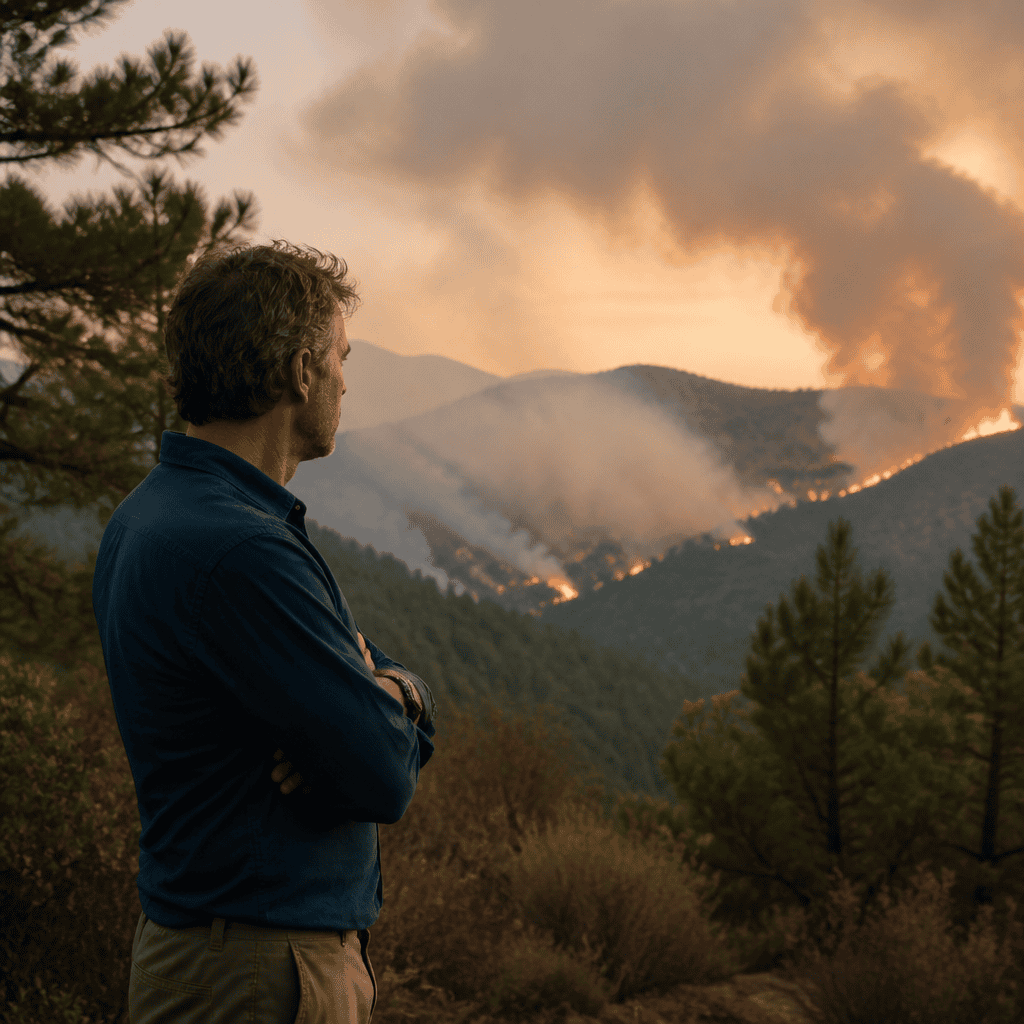
Climate change wildfire risk Europe has just become quantifiable in ways we could not measure before. The World Weather Attribution study published in July 2026 confirmed that the catastrophic wildfires sweeping through Spain and France this summer are not anomalies. They are 20 times more likely because of human-induced climate change. This is not a projection. It is an attribution. The study analysed current conditions against a counterfactual world without industrial greenhouse gas emissions, and the results are unambiguous. For anyone tracking systemic climate risk, whether you are reporting on it, pricing it, or debating it, this changes the baseline entirely.
This piece is written for climate correspondents covering attribution science, ESG analysts and fund managers assessing physical climate risk in European portfolios, and policy researchers building the evidence base for adaptation and mitigation arguments. You are not looking for generalisations. You need specifics, context, and implications you can use in your own work. You operate in environments where precision matters and where misunderstanding the science carries professional consequences. This is also for founders and climate entrepreneurs who recognise that every new attribution study redefines the playing field for resilience investment.
Why This Study Hits Differently Than Earlier Wildfire Research
Previous wildfire science spoke in probabilities and trends. The World Weather Attribution wildfire study speaks in attributable likelihood. The difference is material. Attribution science isolates the human fingerprint on a specific event by comparing observed conditions with climate model simulations of a world without anthropogenic warming. The Spain wildfire climate change 20 times more likely figure is not a metaphor. It is a statistical statement derived from ensemble modelling of temperature, humidity, wind speed, and fuel moisture. Journalists can now report causation, not correlation. Financial analysts can now treat wildfire as a quantified, attributable climate risk rather than an external shock. The biosphere is not failing randomly. It is failing predictably.
The Feedback Loop No One Is Pricing Yet
Here is what the France wildfire study 2026 makes unavoidable. Every hectare of biomass destruction wildfire risk creates is also a carbon source, not a carbon sink. Forests that were sequestering carbon are now releasing it. Soils that stored organic matter for centuries are now exposed and oxidising. The climate impact of a wildfire is not confined to the emissions from combustion. It extends to the decades of lost sequestration capacity. This feedback is understood in earth system science but largely absent from financial risk models and national carbon accounting. If your climate scenario planning does not include biosphere degradation as both a physical risk and a carbon cycle accelerant, it is incomplete.
Track wildfire frequency, biomass loss, and attribution data in real time through our extreme weather dashboard at BiosphereRP.com/dashboard/extreme-weather.
Climate Change Wildfire Risk Europe: What the Attribution Data Shows
The study quantified fire weather conditions using the Fire Weather Index, a composite measure of temperature, relative humidity, wind speed, and drought. Across southern Europe, the July 2026 conditions would have been virtually impossible in a pre-industrial climate. The 20-fold increase in likelihood is a central estimate. The confidence interval narrows every year as observational datasets grow and climate models improve. Importantly, the attribution holds across multiple climate models and multiple methods, which strengthens the robustness of the finding. This is not a single-paper conclusion. It is a convergence. For media covering climate science, this is the kind of multi-method agreement that constitutes a consensus finding. For finance, it is the kind of evidence that should trigger a re-rating of physical risk in Mediterranean and Atlantic coastal exposures.
The Biomass Destruction Wildfire Risk Creates Is Not Reversible on Investment Timescales
When forests burn at this intensity, they do not regenerate to previous carbon density within a decade or even a generation. Mature forest ecosystems take 60 to 100 years to rebuild above-ground biomass, and soil carbon recovery can take longer. This has direct implications for nature-based carbon projects, forestry offsets, and land-use investment strategies across southern Europe. If your portfolio includes forestry assets, agricultural land, or renewable energy infrastructure in fire-prone regions, the biomass destruction wildfire risk is now a recurring exposure, not a one-off event. The biosphere restoration climate science community is clear: you cannot restore what keeps burning. Resilience has to come first.
How to Integrate Attribution Science Into Risk Assessment
- Start with the attribution study itself. Read the World Weather Attribution report in full, not the summary. Understand the confidence intervals, the methods used, and the geographic scope. Do not rely on secondary interpretations.
- Map the study geography to your exposure. If you cover Spain, France, Portugal, Italy, or Greece, this study applies directly. If your financial exposure or editorial beat includes these regions, the 20-fold increase in likelihood is your new baseline.
- Update your scenario assumptions. If your risk models or editorial frameworks still treat 2026 wildfire conditions as tail events, revise them. They are now central scenarios under current emissions trajectories.
- Identify feedback loops in your domain. Ask whether wildfire affects not just physical assets but also carbon accounting, insurance availability, migration patterns, or supply chain continuity. The second-order effects often matter more than the direct damage.
- Source live data where possible. Attribution science is retrospective, but live monitoring can show whether current conditions match or exceed those studied. Use satellite-based fire monitoring, soil moisture indices, and fire weather forecasts.
- Communicate uncertainty accurately. Attribution gives you likelihood ratios, not certainties. A 20-fold increase means the event is vastly more probable, not guaranteed. Precision in language builds trust.
What to Watch Out For
Confusing weather with climate. A single wildfire is a weather event. The changed probability of fire weather conditions is a climate signal. Attribution science links the two, but they are not the same thing.
Assuming adaptation is affordable or straightforward. Fire-prone regions cannot simply fireproof every asset. Some landscapes will become uninsurable or uninhabitable. Acknowledge the limits.
Overlooking the political economy of attribution. Quantified causation creates legal and financial liability. Expect resistance, especially in jurisdictions with high fossil exposure.
Using old baselines. Pre-2020 fire risk maps and insurance models are already outdated. The science is moving faster than the policy and finance infrastructure.
Ignoring the biosphere as an actor. Biomass is not a passive variable. Its destruction and recovery shape climate outcomes and economic resilience. Treat it accordingly.
Quick Checklist
- Read the full World Weather Attribution study, not the press summary.
- Check whether your climate risk scenarios reflect the 20-fold likelihood increase for southern European wildfire.
- Review insurance, investment, or editorial exposure to Spain, France, Portugal, Italy, and Greece.
- Update fire risk assumptions in financial models, risk registers, or news coverage frameworks.
- Monitor live fire weather indices and satellite data during high-risk months.
- Assess whether your organisation’s climate narrative includes biosphere feedbacks and biomass loss.
- Identify who in your network needs this information and share it with context.
- Revisit your organisation’s approach to nature-based solutions and verify wildfire resilience is part of the assessment.
Frequently Asked Questions
How reliable is the 20 times more likely figure for Spain wildfires?
The 20-fold likelihood increase comes from multi-model attribution analysis comparing observed fire weather conditions with simulations of a world without human-caused climate change. It is a central estimate with confidence intervals reported in the study. Multiple climate models and attribution methods converge on similar findings, which strengthens the robustness. No single study is definitive, but this represents the best available science as of mid-2026.
What does biomass destruction wildfire risk mean for carbon accounting?
Wildfire converts stored carbon in vegetation and soils into atmospheric CO2, and it eliminates future sequestration potential for decades. This means carbon offset projects in fire-prone regions carry significantly higher reversal risk. National greenhouse gas inventories also face increased volatility. If your organisation relies on forestry or land-use carbon credits, wildfire risk is now a material financial and compliance concern.
Can biosphere restoration climate science help reduce future wildfire risk?
Biosphere restoration can reduce fire intensity and spread in some contexts, particularly through fuel management, native species diversification, and soil moisture retention. However, restoration cannot outpace current climate change without simultaneous emissions reductions. Restoration is necessary but not sufficient. It buys time and resilience, but it does not reverse the underlying driver of increased fire weather conditions.
How should journalists report attribution science without overstating certainty?
Use the language of likelihood and probability, not inevitability. Say the event was made 20 times more likely, not that it was caused exclusively by climate change. Report confidence intervals and explain what attribution methods do and do not show. Avoid conflating a single event with a trend, but do make clear that the trend is now statistically attributable. Precision in language reflects the science accurately and builds audience trust.
What is the practical difference between the France wildfire study 2026 and earlier wildfire research?
Earlier research often focused on trends in area burned or fire frequency over time. The 2026 attribution study quantifies how much more likely specific fire weather conditions have become due to human-caused climate change. This allows for event-specific conclusions rather than general statements. For finance and policy, it enables risk to be quantified and attributed, which is essential for liability, insurance pricing, and regulatory design.
You are now working with a different baseline. Climate change wildfire risk Europe is no longer a scenario or a projection. It is a measured, attributable, quantified reality. If you report on climate, you can now write with precision about causation. If you price climate risk, you can now model wildfire as a recurring, amplified exposure rather than an outlier. If you debate climate policy, you have evidence that ties specific harms to specific causes. The question is not whether the science will continue to sharpen. It will. The question is whether institutions, markets, and governments will move at the speed the biosphere is already moving.
Explore live wildfire tracking, biomass monitoring, and climate attribution data to support your analysis and reporting.
Visit the BRP-App to see what the data shows today.