Biomass Destruction and the 2026 Heatwave Crisis | Envisionation | BiosphereRP.com
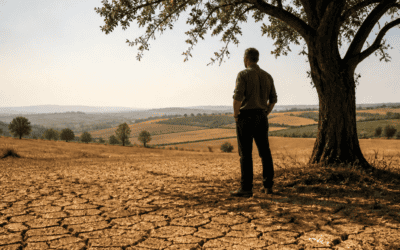
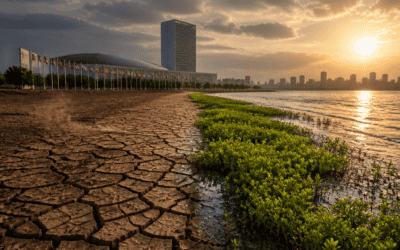
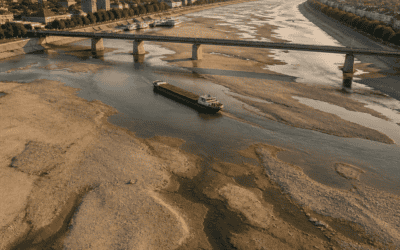
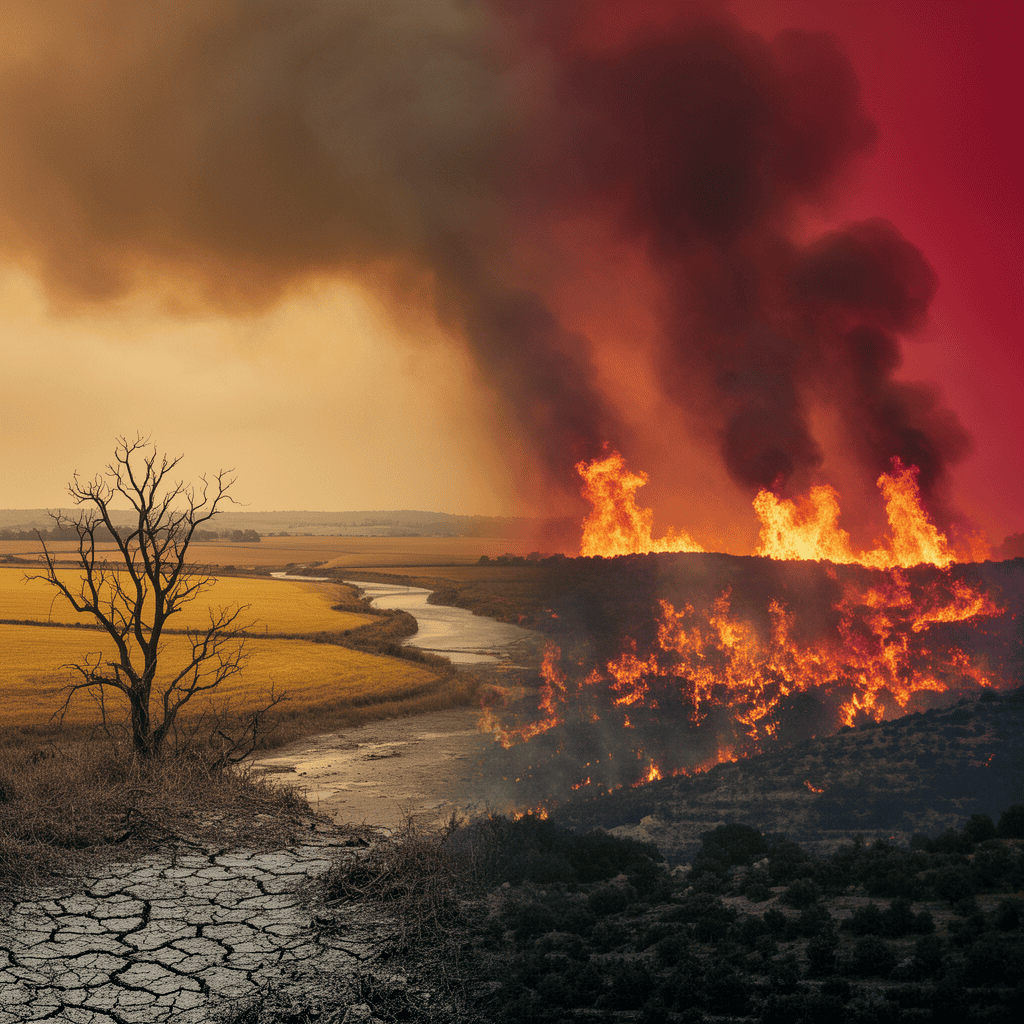
Across the continent, the summer of 2026 has written itself into the record books in the most devastating way imaginable. Spain recorded 45.1°C in June. The highest temperature ever measured on the Iberian Peninsula. France declared its hottest day since records began in 1947. The UK broke its June temperature record three days in a row. Wildfires have consumed over 110,000 hectares across Portugal, Spain, France, and Greece, nearly double the burned area recorded by the same date in 2025. And Europe’s running excess-mortality estimate for the heatwave season now exceeds 9,900 lives.
Climate change headlines dominate the news cycle. But one critical driver of this unfolding catastrophe is still being dangerously underreported: biomass destruction.
The connection between biomass destruction and heatwave intensity is not a theory; it is increasingly well-evidenced science. And if we continue to overlook it, the consequences for communities, economies, and ecosystems across Europe will only deepen.
What Is Biomass Destruction and Why Does It Matter?
Biomass refers to the total living biological material within an ecosystem – trees, plants, soil organisms, fungi, and all the complex organic matter that binds healthy land together. When we talk about biomass destruction, we are referring to the large-scale loss of this living system through deforestation, agricultural overintensification, urban development, unsustainable land use, and increasingly, wildfire itself.
In just ten thousand years, human civilisation has reduced the total amount of life on Earth by more than half; from an estimated 1,100 gigatonnes of living carbon to approximately 550 gigatonnes today. That is not a background statistic. It is the central fact behind what Europe is experiencing this summer.
Healthy biomass performs an extraordinary array of climate-regulating functions that most people never see but everyone depends on:
- Evapotranspiration cooling: Forests and vegetation release water vapour into the atmosphere, creating localised cooling effects that can reduce ground-level temperatures by several degrees.
- Carbon sequestration: Living biomass locks carbon out of the atmosphere. When it is destroyed, that carbon is released — accelerating the very warming that drives further destruction.
- Soil moisture retention: Root systems and organic matter hold water in the landscape, buffering against drought conditions that make land more susceptible to wildfire.
- Albedo regulation: Vegetated land reflects and absorbs solar radiation differently than bare soil or urban surfaces, influencing regional temperature patterns.
Strip away these functions and you do not simply lose trees or grassland; you remove the biosphere’s capacity to self-regulate. You cut the planet’s climate management engine. The land becomes hotter, drier, and more vulnerable. Biomass destruction and extreme weather do not run in parallel. They feed each other.
Our emissions are landing on a natural system that has lost much of its ability to absorb them, and that makes the climate problem substantially worse than is generally understood.
The Europe Wildfire 2026 Crisis: A Symptom of Deeper Collapse
The Europe wildfire 2026 season did not emerge from nowhere. It is the logical consequence of decades of accumulated biomass loss across the Mediterranean, Iberian Peninsula, and increasingly, central Europe. Scientists tracking biosphere health have been raising alarms for years about the degradation of Europe’s natural fire buffers. The moist, biodiverse woodland and scrubland ecosystems that historically prevented fire from spreading at catastrophic scale.
As those buffers have been eroded by a combination of agricultural abandonment, poor land management, invasive species pressure, and prior heatwave damage, the landscape has become primed for exactly the kind of megafires we are witnessing in 2026. Each fire destroys more biomass – triggering yet more drying, more carbon release, and more heat. One of the world’s most respected climate scientists described what we are experiencing as virtually impossible without the decades of human-driven climate change that preceded it.
This is not solely a southern European problem. The UK heatwave causes of 2026 are similarly rooted in compromised biosphere function. The UK has lost vast amounts of ancient woodland, peatland, and natural vegetation over the past century. Peat alone, a critical form of biomass, stores enormous quantities of carbon and plays a major role in regulating water cycles. Its degradation has left British landscapes less resilient to the extreme heat events that are now arriving with increasing frequency and severity.
Parts of the Amazon and Africa’s forest systems have already flipped from net carbon absorbers to net carbon emitters. Europe is witnessing its own, slower version of the same transition.
Biosphere Collapse Climate: Understanding the Feedback Loop
The concept of biosphere collapse climate describes the process by which the degradation of living ecosystems removes the natural feedback mechanisms that keep the climate within habitable boundaries. It is one that climate scientists have been modelling with growing urgency, and one that policymakers and investors can no longer afford to treat as a specialist concern.
Consider the sequence now playing out across Europe:
- Biomass loss reduces evapotranspiration — land surface temperatures rise
- Higher temperatures increase drought stress — more biomass dies or becomes combustible
- Wildfires destroy remaining biomass — carbon is released into the atmosphere
- Increased atmospheric carbon drives further warming — the cycle accelerates
- Reduced vegetation cover degrades soil — recovery becomes progressively harder
This is not a linear problem with a simple solution. It is a systemic challenge that demands systemic thinking, and systemic accounting. The biomass loss extreme weather connection means that addressing one without the other is, at best, a partial response. Cutting what goes into the atmosphere does nothing to restore the natural sinks that pull carbon back out. And those sinks are now failing.
Emissions reductions remain essential. But they are half of the equation at best. The other half is restoring living carbon, and that cannot happen without first understanding where it has gone, and at what rate it continues to disappear.
The Economic Cost Heatwave Europe Cannot Afford to Ignore
For those who frame environmental issues through a financial lens, the numbers emerging from the 2026 heatwave season are no longer speculative. Robert Costanza’s landmark valuation of global ecosystem services puts their annual worth at US$125 to 145 trillion, comparable to, and on updated estimates exceeding, the entire output of the global economy. The Business and Sustainable Development Commission has estimated that delivering the UN Sustainable Development Goals opens at least US$12 trillion per year in market opportunity by 2030. Every hectare of biomass destroyed narrows that opportunity.
Consider the cascading economic impacts already being felt this summer:
- Agricultural losses: Crop failures across southern and central Europe are driving food price inflation and supply chain disruption. The biomass destruction of productive soil ecosystems compounds this further.
- Tourism collapse: Key Mediterranean destinations have seen visitor cancellations en masse as extreme heat and wildfire smoke make travel not just uncomfortable but dangerous.
- Infrastructure strain: Roads, railways, and energy grids built for historical climate conditions are failing under heat stress. In France alone, nuclear output has been curtailed at multiple sites due to river temperatures too high to provide adequate cooling water.
- Public health expenditure: Heat-related hospital admissions, mental health impacts, and excess mortality place enormous pressure on health systems. France placed 49 of its 96 mainland departments under its highest heat alert.
- Insurance market disruption: Insurers across Europe are repricing or withdrawing cover for properties and businesses in high-risk zones, creating financial instability and investment uncertainty.
- Ecosystem services loss: The economic value of natural services provided by healthy biomass — water filtration, flood protection, carbon storage, pollination — is estimated in the trillions annually. As biomass is destroyed, these services disappear without replacement cost being acknowledged in any balance sheet.
The economic case for protecting and restoring the biosphere is not an environmental argument dressed in financial clothing. It is a direct, rational assessment of long-term systemic risk. A business can appear highly profitable while degrading soils, polluting water, and transferring enormous long-term costs onto society because none of that damage appears in its accounts. This is not a failure of markets. It is a failure of the information entering them. Governments, institutions, and investors that fail to integrate this reality into their planning are operating with an incomplete model of the world they inhabit.
What Needs to Change: From Crisis Response to Systemic Restoration
The instinctive response to events like the Europe wildfire 2026 crisis is to mobilise firefighting resources, issue emergency declarations, and provide disaster relief. These responses are necessary. They are not sufficient. They address consequences while the underlying causes biomass destruction, biosphere degradation, loss of natural climate regulation, continue unchecked.
A 2024 study published in Nature Climate Change, surveying almost 130,000 people across 125 countries, found that 69% were willing to contribute 1% of personal income to climate action, and 89% demanded intensified political action. The constituency for restoration exists at global scale. What it currently lacks is a credible, investable mechanism through which to act.
A genuinely effective response requires a fundamental shift in how we understand and account for the health of living systems. That means:
- Measuring what matters: Developing robust frameworks for tracking biomass health, biosphere integrity, and ecosystem function at landscape scale — not just carbon stock figures, and not just national averages that obscure where the losses are happening fastest.
- Integrating natural capital into decision-making: Ensuring that the value of living systems is properly reflected in economic, planning, and investment decisions rather than treated as an externality. You cannot manage what you cannot measure, and the living world has been off the books for too long.
- Scaling restoration investment: Moving beyond tokenistic tree-planting initiatives toward genuine, ecologically grounded landscape restoration. China’s Loess Plateau restoration lifted more than 2.5 million people out of poverty. The Great Green Wall of Africa has restored over 20 million hectares of degraded land. The knowledge and proof exist. What has been missing is the financial architecture to fund and scale it.
- Building institutional capacity for policymakers: Equipping governments with the data, tools, and frameworks needed to understand biosphere health and act on it effectively — moving environmental risk from a science advisory footnote to a central pillar of national economic planning.
The biomass destruction heatwave crisis of 2026 is a warning. Whether it becomes a turning point depends on whether those with the capacity to drive change, in policy, in business, in finance, in civil society, are equipped with the understanding and the tools to respond at the necessary scale and speed.
The Path Forward Starts With Understanding
Europe’s burning landscape is not an act of nature beyond human influence. It is, in significant part, the consequence of choices — about how we manage land, how we account for natural systems, how we measure progress and risk, and how we value the living world that underpins everything we depend on.
There are two futures from here. One is a future of deepening collapse: a depleted, resource-scarce world in which societies fracture under the compounding consequences of a degraded biosphere. The other is the future people have grown up believing in — one of continuing progress, prosperity, and abundance. That future is only possible if we take care of our single greatest asset: a healthy biosphere. Restoring it is not a constraint on that future. It is the precondition for it, and the greatest economic opportunity of our time.
Reversing the biomass loss extreme weather feedback loop will not happen through emergency response alone. It requires the kind of systemic, data-informed, long-term thinking that recognises the biosphere not as background scenery but as the foundational infrastructure of a functioning economy and society. The 2026 heatwave crisis is, among many things, an urgent invitation to think differently about what we measure, what we protect, and what we restore.
See the Data Behind This Crisis in Real Time
Understanding the true drivers of Europe’s climate crisis, including the critical role of biomass destruction and biosphere health, is the first step toward building more resilient, informed, and effective responses. Whether you work in policy, business, finance, land management, or advocacy, the tools and frameworks you use to understand the living world will shape the decisions you make and the outcomes you achieve.
The BRP Earth Monitor tracks extreme weather events and their relationship to global biosphere health in real time. It is built precisely to make the crisis visible — and to inform the response it demands.