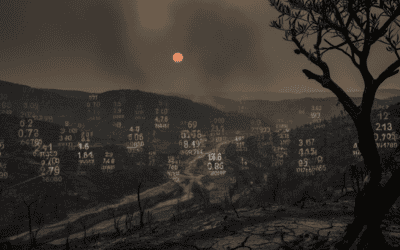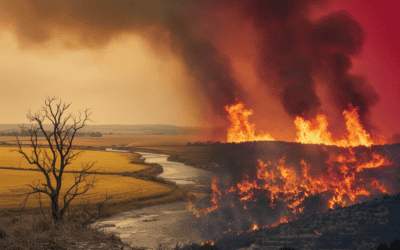
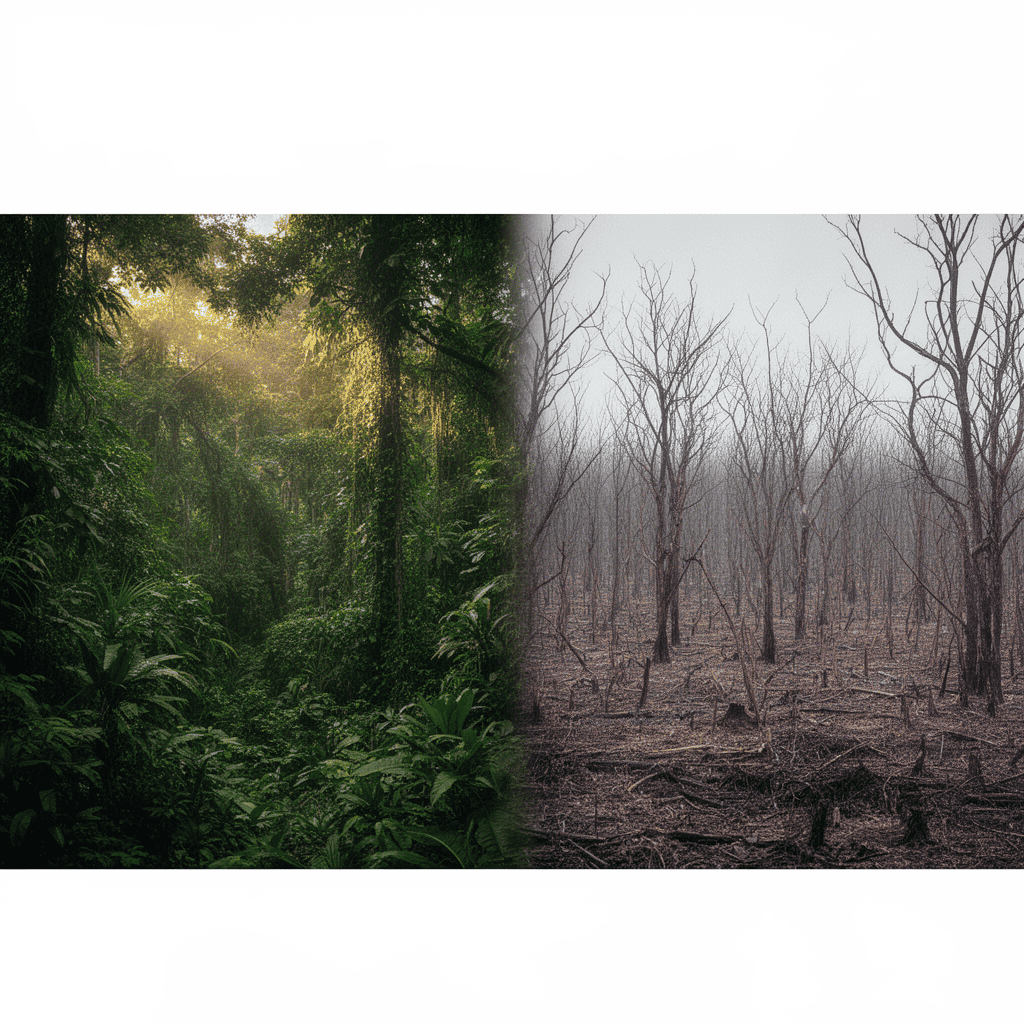
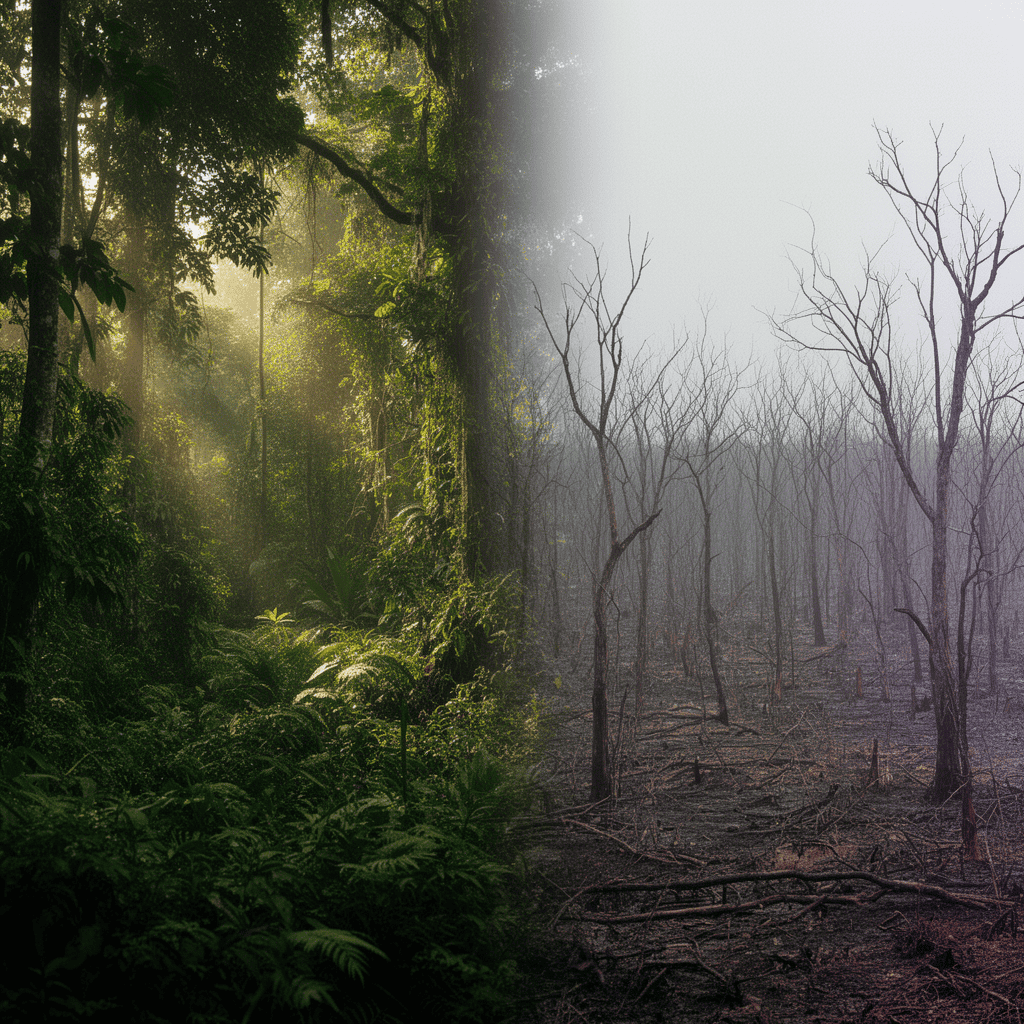
The Earth biomass loss statistics are staggering, and yet they rarely make headlines. While carbon emissions and temperature rise dominate climate conversations, a quieter and equally devastating crisis unfolds beneath the surface: the collapse of the living biosphere itself.
For climate-aware professionals and impact investors, understanding the true scale of global biomass decline is no longer optional. It is foundational to every decision about our planetary future.
The Core Numbers: What We Have Already Lost
Scientific research, most notably from the Weizmann Institute of Science, has produced some of the most sobering data points in modern environmental science. Here is what the evidence tells us about living biomass reduction across the planet:
Wild mammals have declined by 85% in total biomass since the dawn of human civilisation. Today, humans and livestock account for approximately 96% of all mammal biomass on Earth.
Wild birds have lost around 70% of their collective biomass, with farmed poultry now representing roughly 70% of all bird biomass globally.
Marine fish populations have declined by an estimated 80% in biomass compared to pre-industrial levels.
Plant biomass has been halved – from an estimated 1,000 gigatons of carbon before human civilisation to approximately 450 gigatons today.
Insects, which underpin virtually every terrestrial ecosystem, are declining at rates of up to 2.5% per year in some regions. A trajectory that, if unchecked, could result in functional collapse within a century.
These are not projections. These are documented realities driven by deforestation, agricultural expansion, pollution, overharvesting, and climate change. The biosphere degradation reflected in these numbers represents the systematic dismantling of the life-support systems that all economies, and all life, depend upon.
Why Biomass Loss Is a Different Kind of Crisis
Unlike a single pollution event or a seasonal drought, living biomass reduction operates at a systemic level. When biomass is lost, ecosystems lose:
Resilience — the ability to absorb and recover from shocks
Productivity — the natural generation of food, clean water, and raw materials
Stability — the regulatory functions that keep climate, water cycles, and soil health in balance
This is why the human impact on the biosphere cannot be measured solely in parts per million of CO₂. The biosphere is a living, interconnected system. Stripping it of biomass is equivalent to removing organs from a body, each loss compounds the next, accelerating toward thresholds that may prove irreversible.
For investors and professionals operating in agriculture, finance, infrastructure, or technology, this represents material risk. Supply chains, water availability, food security, and regulatory landscapes are all being reshaped by global biomass decline in ways that balance sheets have not yet fully priced in.
The Acceleration Problem
What makes today’s earth biomass loss statistics particularly alarming is not just the scale; it is the speed. Natural extinction rates are estimated at 0.1 to 1 species per million species per year. Current observed rates are between 100 and 1,000 times higher. The living world is contracting faster than at any point since the mass extinction event that ended the age of the dinosaurs.
Critically, biomass loss does not move in a straight line. It accelerates through feedback loops:
Fewer pollinators mean reduced plant reproduction, which means less food and habitat for other species.
Degraded forests store less carbon, accelerating warming, which stresses remaining ecosystems further.
Declining soil biodiversity reduces agricultural yields, pushing expansion into remaining wild habitats.
These are the mechanics of biosphere degradation. A cascading system under increasing pressure.
What Responsible Action Looks Like Now
Understanding the data is the first step. Acting on it is the second. Climate-aware professionals and impact investors are increasingly recognising that nature-positive strategies are not a niche ethical concern. They are a core component of long-term value creation and risk management.
Key areas where informed action is needed include:
Biodiversity-integrated investment frameworks that move beyond carbon accounting alone.
Supply chain audits that assess land use, habitat conversion, and ecosystem impact.
Policy engagement aligned with global biodiversity frameworks, including the Kunming-Montreal Global Biodiversity Framework targets.
Real-time monitoring tools that provide verified, accessible data on biosphere health at local, regional, and global scales.
The last point is increasingly critical. Decision-makers need access to current, credible data , not just historical reports, to navigate the human impact on the biosphere in a rapidly changing environment.
Track the Biosphere in Real Time
If the numbers in this article have reinforced the urgency you already feel, the next step is staying connected to the data as it evolves. The BRP App gives climate-aware professionals and impact investors a live window into biosphere health metrics, translating complex ecological data into clear, actionable intelligence.
Explore the BRP App today at https://biosphererp.com/ and start making decisions informed by the full picture of planetary health.
The biosphere does not wait. Neither should we.