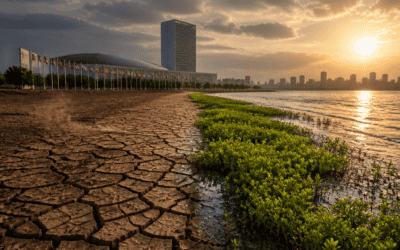
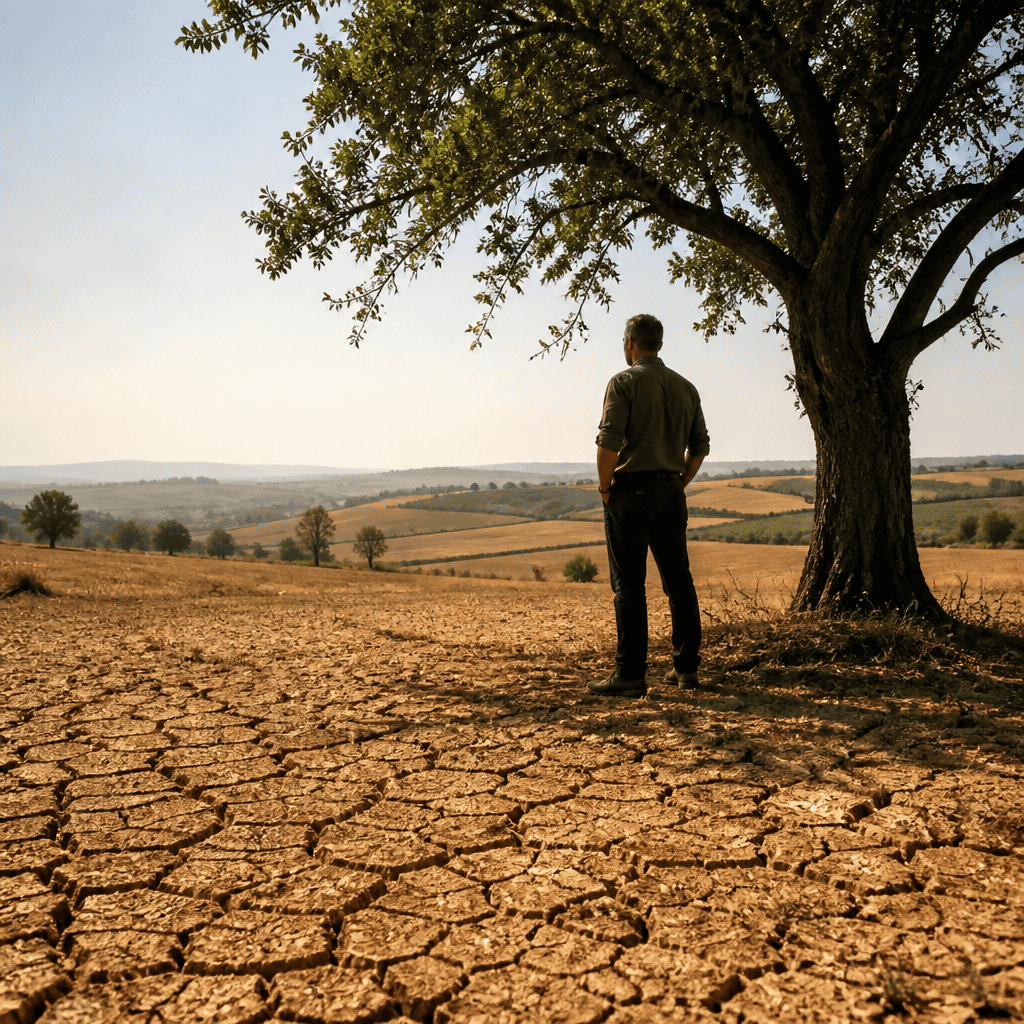
Climate scepticism has not vanished this summer. It has changed shape. After weeks of punishing heat across southern Europe, dried-out reservoirs and another round of crop losses, very few people are still arguing that nothing is happening. The argument has moved. It now runs along the lines of “yes, the climate is changing, and we will simply have to live with it”. That is not denial. It is climate stoicism, the belief that adaptation is cheaper and more realistic than action. For anyone reporting on the debate, participating in it, or pricing climate risk into a portfolio, this matters more than the old denial story. A public that accepts the physics but rejects the remedy is a very different problem, and it needs a different answer.
Who This Is For
This piece is written for three groups who are all watching the same shift from different seats. Journalists and editors covering climate, energy and politics, who need to characterise a moving public mood accurately rather than recycle a stale two-sided framing. Participants in the climate debate itself, including campaigners, policy advisers, academics and the people arguing the other side in good faith. And investors and analysts in green financial markets, who need to judge whether political support for decarbonisation in the UK and Europe is firming up or fracturing. If your work depends on reading the direction of travel correctly, the distinction between denial and stoicism is not semantics. It changes the forecast.
The Debate Has Moved On, But the Framing Has Not
Most coverage is still fighting the last war. The default structure remains sceptic versus scientist, as though the live question were whether warming is real. It is not. The live question is whether anything can usefully be done about it, and at what cost to households already squeezed. Reform UK has built a serious electoral proposition on that second question, and Richard Tice’s arguments on climate change are rarely about thermometers. They are about bills, industrial jobs and the credibility of net zero as a delivery programme. Treating that as denial misses the point and, worse, hands the argument over. A heatwave does not answer a cost objection.
This piece responds to Mark O’Connell’s Irish Times column of 22 August 2026, which named climate stoicism as the successor to outright denial and identified it as the live political challenge.
Climate Stoicism: Why the New Scepticism Is an Argument About Remedies, Not Evidence
The honest response to climate stoicism is to concede part of its case. Sceptics who say that emissions cuts alone will not cool anything this decade are right, and pretending otherwise has damaged public trust. Even a perfect global net zero, meaning no more carbon added to the atmosphere than is removed, leaves the existing surplus in place and the heating already committed to the oceans. Adaptation, meanwhile, is a plan to keep paying for damage. Neither answers the summer people have just lived through.
At Envisionation we have argued for years that the only credible objective is restoration, not endurance. That means actively bringing the atmosphere and the biosphere back towards a functioning state, rather than slowing the rate at which we degrade them. It requires emissions reduction, large-scale carbon drawdown through living systems, and serious research into direct cooling methods such as marine cloud brightening, the technique of brightening low ocean clouds so they reflect more sunlight. Climate scepticism loses much of its force when the offer is a plan to cool the planet rather than a plan to cope.
Biomass Destruction Is the Hole in Climate Policy Nobody Prices
Carbon accounting has a blind spot, and it is alive. Biomass, meaning the total mass of living matter in forests, soils, wetlands and the ocean, has been stripped back so severely over two centuries that the planet has lost much of its capacity to regulate itself. Whale populations, plankton density, soil carbon and old-growth forest are not decorative. They are the machinery that moves carbon and nutrients around the system. Biomass destruction is treated in most climate policy as a habitat issue for a different department, priced separately from energy, if at all. For green financial markets this is a mispricing with consequences, because natural capital that is assumed to keep absorbing carbon may be doing less of it each year, quietly, while the models carry on regardless.
Step by Step: How to Report or Assess the New Climate Scepticism
- Establish which claim is actually being made. Separate rejection of the physics, which is now rare, from rejection of the policy, which is common and often specific. Quote the objection as stated rather than as assumed.
- Test the cost argument on its own terms. Ask what the objector believes adaptation will cost over thirty years, and compare it with the cost of the mitigation they are refusing. Most stoic positions have never had that sum done.
- Ask what happens to the existing surplus. Any credible plan has to address the carbon already in the atmosphere and the heat already in the ocean, not just future emissions.
- Follow the biomass. Check whether the plan under discussion restores living systems or simply leaves them out of scope, and whether any carbon credits attached to it depend on ecosystems that are still declining.
- Distinguish research from deployment. Cooling technologies such as marine cloud brightening are at the research stage, and reporting that collapses the two makes sober discussion harder.
- Track the money, not just the rhetoric. Political language on net zero moves faster than capital allocation, and the gap between the two is usually the real story.
What to Watch Out For
- Treating heatwaves as proof that the argument is won. Weather shifts sentiment temporarily. A wet, cool summer will shift it straight back, and positions built on the last fortnight’s forecast are worthless.
- Labelling all cost objections as denial. It flatters no one, and it pushes reasonable people towards the people who take their bills seriously.
- Reporting climate stoicism as apathy. It is often a considered position held by informed people who believe the remedy has failed.
- Accepting offset and natural capital claims without checking the underlying ecosystem trend.
- Using “geoengineering” as a single category. It bundles very different interventions with very different risk profiles into one unusable word.
Quick Checklist
- Ask every source directly whether they accept the warming trend, before discussing policy.
- Get a number attached to any claim that adaptation is cheaper.
- Check whether the plan being discussed addresses the historic carbon surplus or only future emissions.
- Confirm whether biomass and ocean health are inside or outside the scope of the policy you are covering.
- Note the difference between funded research, field trials and deployment when covering cooling technologies.
- Look at the biosphere restoration plan case for scale, cost and sequencing before writing that restoration is unrealistic.
- Watch Reform UK’s energy positions against actual grid investment decisions, not press statements.
- Date your evidence. Cite the season’s data, not the last decade’s talking points.
Has the 2026 summer heat changed climate sceptics’ minds?
For many people, yes, but not in the way campaigners hoped. Outright rejection of warming has become much harder to sustain in public, so the objection has migrated to cost, delivery and fairness. The practical result is climate stoicism, an acceptance of the science paired with a preference for adaptation over action. Anyone treating that as victory is misreading it.
What is the difference between climate adaptation and climate restoration?
Adaptation means changing how we live so that we can survive a hotter planet, through flood defences, cooling, drought-resistant crops and insurance. Restoration means actively returning the atmosphere and biosphere towards a stable, functioning state, by cutting emissions, drawing down the existing carbon surplus and rebuilding living systems. Adaptation accepts the damage as permanent and budgets for it. Restoration treats it as reversible, given serious effort.
Why does biomass loss matter for climate policy?
Living systems move enormous quantities of carbon and nutrients, and two centuries of forest clearance, soil degradation, whaling and ocean disruption have cut that capacity substantially. Policy that counts only fossil fuel emissions therefore misses a major part of the problem and overstates how much natural absorption we can still rely on. Restoring biomass is one of the few levers that removes carbon and rebuilds resilience at the same time.
Is marine cloud brightening a substitute for cutting emissions?
No. It is a potential means of reducing heat in the short term while slower measures take effect, and it does nothing about ocean acidification or the underlying carbon surplus. Presenting it as an alternative to decarbonisation is both scientifically wrong and politically damaging. It belongs in a portfolio alongside emissions cuts and biosphere restoration, not instead of them.
The window in which the public was arguing about thermometers has closed. What replaces it will be decided over the next two or three years, and it will be decided by whoever offers a remedy people find credible. If the only options on the table are a decarbonisation programme that admits it cannot cool anything this decade, and a stoic shrug that budgets for the damage, the shrug will win more often than it should. There is a third answer, and it is buildable. Whether you write about this, argue about it, or invest against it, the useful next step is to examine the restoration case properly rather than assume it away.
See the biosphere data behind this summer’s climate shift in real time.